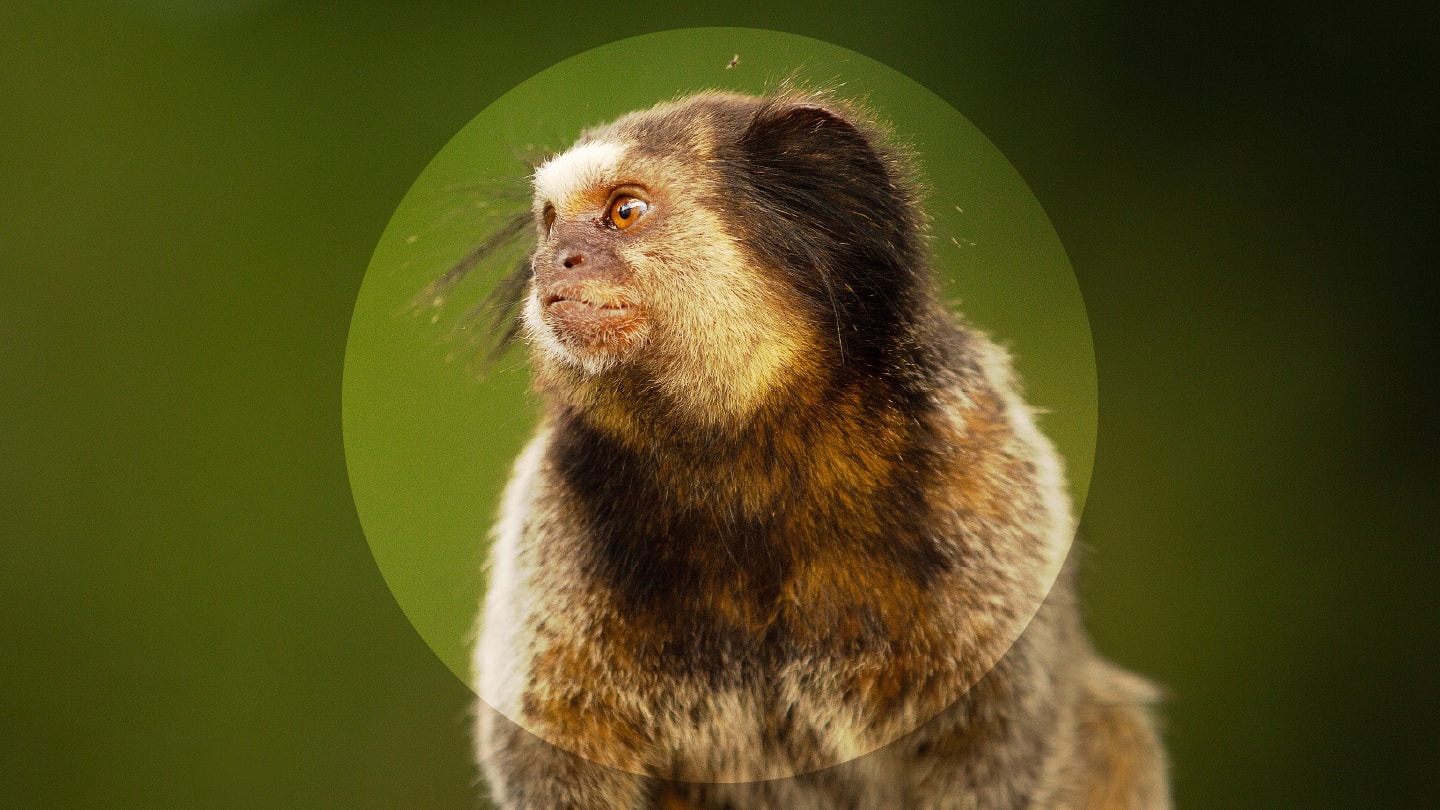
Researchers have assembled a complete common marmoset genome, resolving regions that were missing or incorrectly represented in previous references. The resource could improve genomic analysis in disease research involving this widely used primate model.
Marmosets have emerged as an important species to study for disease understanding. Their DNA is more closely related to humans than other model species like rodents, while their small size make them easy to study. Importantly, marmosets experience age-related memory loss, which helps researchers study neurodegenerative diseases such as Alzheimer's.
For the study, published in Cell, the researchers analyzed fibroblasts from one male and one female marmoset. They combined high-fidelity sequencing, ultra-long reads, and chromosome-conformation data to produce one telomere-to-telomere assembly and three near-complete haplotypes.
The new reference added more than 88 million bases of previously unresolved sequences. It covered centromeres, sex chromosomes, acrocentric chromosome arms, subtelomeric satellites, and the major histocompatibility complex. Seventy percent of chromosomes across the four haplotypes were assembled from one telomere to the other, excluding gaps within ribosomal DNA arrays. More than 99 percent of each genome was estimated to be complete and accurate.
Aligning short-read data from 40 marmosets to the new reference produced fewer insertion and deletion calls caused by reference gaps. It also reduced the number of sites at which a genotype could not be assigned by approximately 84,000 per animal. This suggests that the assembly could reduce technical artifacts in research-based variant calling, although it was not evaluated using clinical diagnostic samples.
The researchers annotated 21,121 protein-coding genes and identified 566 genes with new transcript models supported by long-read RNA sequencing. These included lineage-specific gene copies, candidate newly transcribed loci, and genes recovered from previously unresolved regions.
The approximately 5-million-base major histocompatibility complex was also assembled across all four haplotypes. Analysis identified structural variation and expansions among genes involved in antigen presentation. Several previously uncataloged candidate genes appeared in all four haplotypes, but further studies are needed to determine their function.
Of 81 human loci associated with Alzheimer’s disease and related dementias, 76 had candidate marmoset counterparts. Coding variation was detected in 75 of these loci across 230 animals. Association studies and functional testing will be required to establish whether these variants are relevant to disease.
The researchers also produced a preliminary marmoset pangenome covering six haplotypes. Because its variant calls have not been independently validated, they advised using it for variant discovery rather than as a genotyping panel.
The study included complete assemblies from only two animals. Additional population sequencing will be needed to characterize genomic diversity and assess the functional significance of the identified genes and variants.
Newsletters
Receive the latest pathologist news, personalities, education, and career development – weekly to your inbox.