According to the Agency for Healthcare Research and Quality, communication failures have been implicated as a root cause in more than 70 percent of sentinel events reported in US hospitals. This figure shows just how dependent patient safety is on information transfer between care teams.
Improving patient outcomes increasingly depends on how effectively pathology, clinical care, and supporting services work together. Diagnostic accuracy means little if a critical result doesn't reach the right clinician in time, or if it arrives without the clinical context needed to act on it.
This article examines how communication gaps arise and practical ways to strengthen care coordination.
Why care coordination matters
Fragmented care shows up in a number of ways, from duplicated testing and delayed follow-up on abnormal results to medication conflicts that go unnoticed because no one has the full picture. Each of these carries a cost, both clinical and financial. Research on avoidable hospital readmissions estimates that inadequate care coordination and poorly managed care transitions account for between $25 billion and $45 billion in unnecessary spending annually in the US alone, much of it tied to breakdowns in communication rather than clinical error.
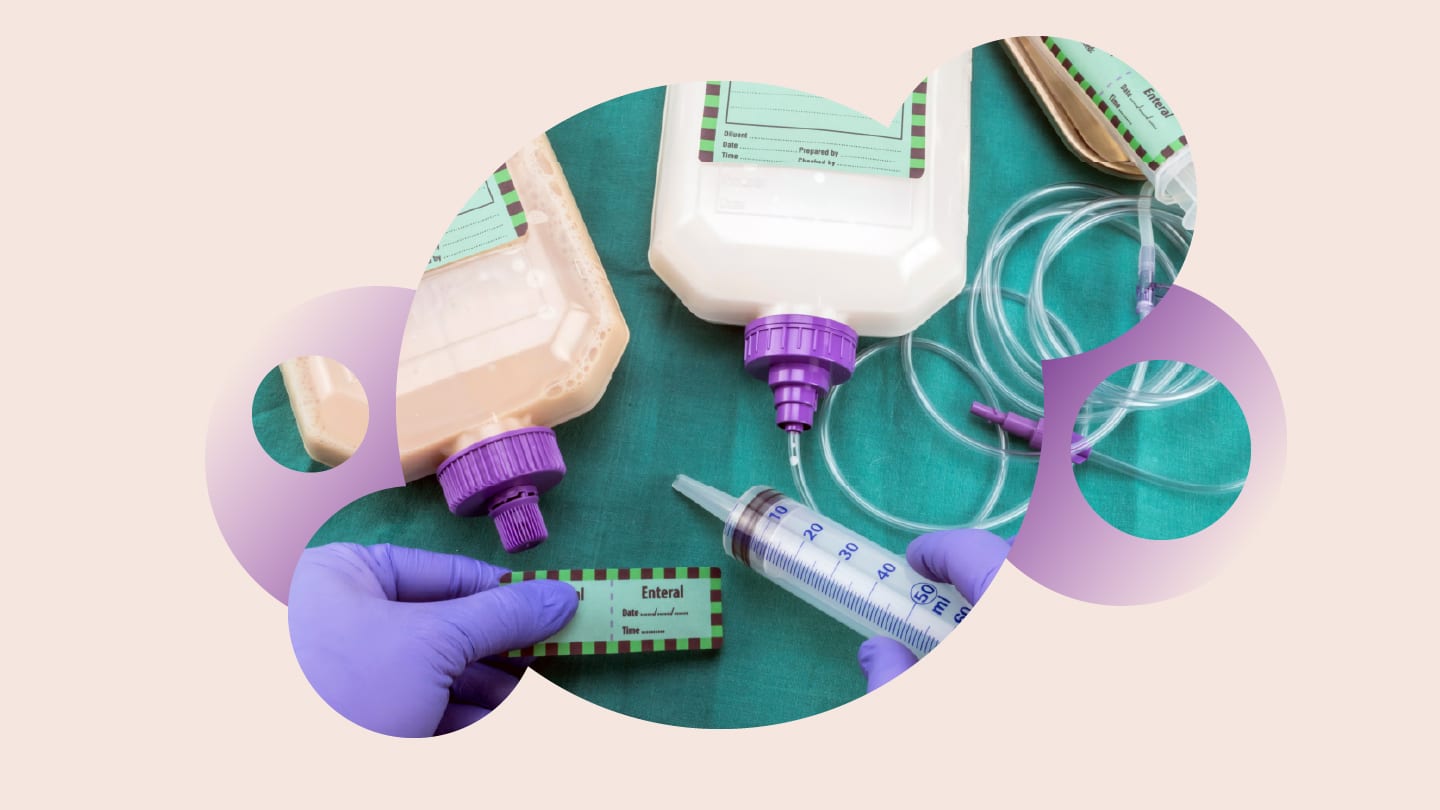
Coordination gaps are often most visible at points of transition, and few transitions are more complex than the move from hospital to home for patients with ongoing clinical needs. Consider a patient discharged on tube feeding. Managing home enteral nutrition safely depends on several factors holding together at once, including the biochemical monitoring that guards against refeeding syndrome in the first few weeks.
The laboratory sits inside that pathway rather than beside it: phosphate, potassium, and magnesium results returned late, or returned to a clinician who is not the one adjusting the feed, are where a well-planned discharge starts to come apart.
Multidisciplinary collaboration between clinicians, pathologists, nurses, pharmacists, and allied health professionals reduces the risk of complications by closing the gaps where errors typically occur. It also supports safer clinical decision-making generally. Laboratory data plays a substantial role in that process, though the precise figure is debated. A peer-reviewed study published in The Journal of Applied Laboratory Medicine found that laboratory testing directly informed clinical decisions in a meaningful share of encounters across care settings. The findings reinforce why timely, well-communicated results matter as much as accurate ones.
A practical approach to improved care coordination
1. Standardize care pathways
Standardized, evidence-based care pathways reduce variation in how patients with similar conditions are managed. When every team member, from the ordering physician to the reporting pathologist, works from the same protocol, fewer decisions rely on informal or ad hoc communication.
2. Structure handoffs and transitions
Structured handoff tools, such as standardized discharge summaries or shift-change checklists, help ensure that critical information, including pending results and follow-up requirements, doesn't depend on memory or informal conversation. One review found that only 12 to 34 percent of discharge summaries reached aftercare providers by the time of the patient's first follow-up appointment, an issue that structured handoff processes are designed to avoid.
3. Hold regular multidisciplinary case reviews
Tumor boards and multidisciplinary team meetings give pathologists, radiologists, oncologists, and surgeons a shared forum to interpret findings together. This reduces the risk of a result being misread or acted on without full clinical context.
4. Engage patients as active participants
Patients and caregivers who understand their care plan are better positioned to flag inconsistencies, ask questions, and follow through on next steps. Clear, plain-language communication about test results and what they mean is as much a part of coordination as the systems behind it.
5. Establish clear communication protocols
Defined protocols for how and when critical or abnormal results are escalated, and to whom, remove ambiguity from time-sensitive situations. This is particularly important for laboratory-generated critical values, where delay can have direct clinical consequences.
6. Build in continuous quality improvement
Regular audits of turnaround times, handoff completion, and follow-up rates help organizations identify where coordination is breaking down before it affects patient outcomes, rather than after.
Strengthening care coordination through collaboration and connected systems
Process improvements can only go so far without the infrastructure to support them. Standardized reporting formats, shared care plans, and interoperable electronic health records and laboratory information systems all help ensure that the right information reaches the right clinician at the right time, rather than sitting in a system that another provider cannot readily access.
Digital health tools have made a genuine difference, connecting laboratory information systems with hospital and community electronic records. In this way, pathology data is visible across the care continuum rather than confined to a single department. The result is improved continuity, with a treating physician, a specialist, and a home care team all working from the same current information, rather than reconciling different versions of a patient's history after the fact.
Improving patient outcomes depends on coordinated communication, shared accountability, and seamless information exchange across every part of the care team. When pathology, clinical care, and supporting services operate through standardized processes and connected systems, rather than in parallel but separate workflows, patients benefit in concrete ways with fewer delays between testing and treatment, more informed clinical decisions, and better continuity as care moves from hospital to home.
Newsletters
Receive the latest pathologist news, personalities, education, and career development – weekly to your inbox.