If there was one clear takeaway from the Transforming Digital Pathology and AI: The Path Forward conference in Edinburgh, May 2026, it was this: pathology is moving toward a digital future – but the real challenge now is figuring out how to make that transition work in everyday clinical practice.
Across presentations and panel discussions, speakers repeatedly emphasized that AI is not here to replace pathologists. Instead, the conversation focused on how digital pathology (DP) and AI tools can help support laboratories already struggling with rising workloads, staffing shortages, and increasing diagnostic complexity.

That message clearly resonated with attendees. During one audience poll, only two or three laboratory professionals in the room said they were not experiencing staffing shortages. Almost everyone else described some degree of understaffing, workforce burnout, or mounting case volumes. In that context, discussions around AI quickly shifted away from futuristic ideas of automation and toward the practical realities of keeping pathology services running efficiently.
A major theme throughout the meeting was the problem of siloed systems. Speakers argued that fragmented imaging platforms and disconnected workflows continue to slow laboratories down, limiting both operational performance and clinical efficiency. Several sessions highlighted how these gaps can contribute to delayed diagnoses and poorer patient outcomes, particularly when pathology data, imaging, and laboratory systems are unable to communicate effectively.

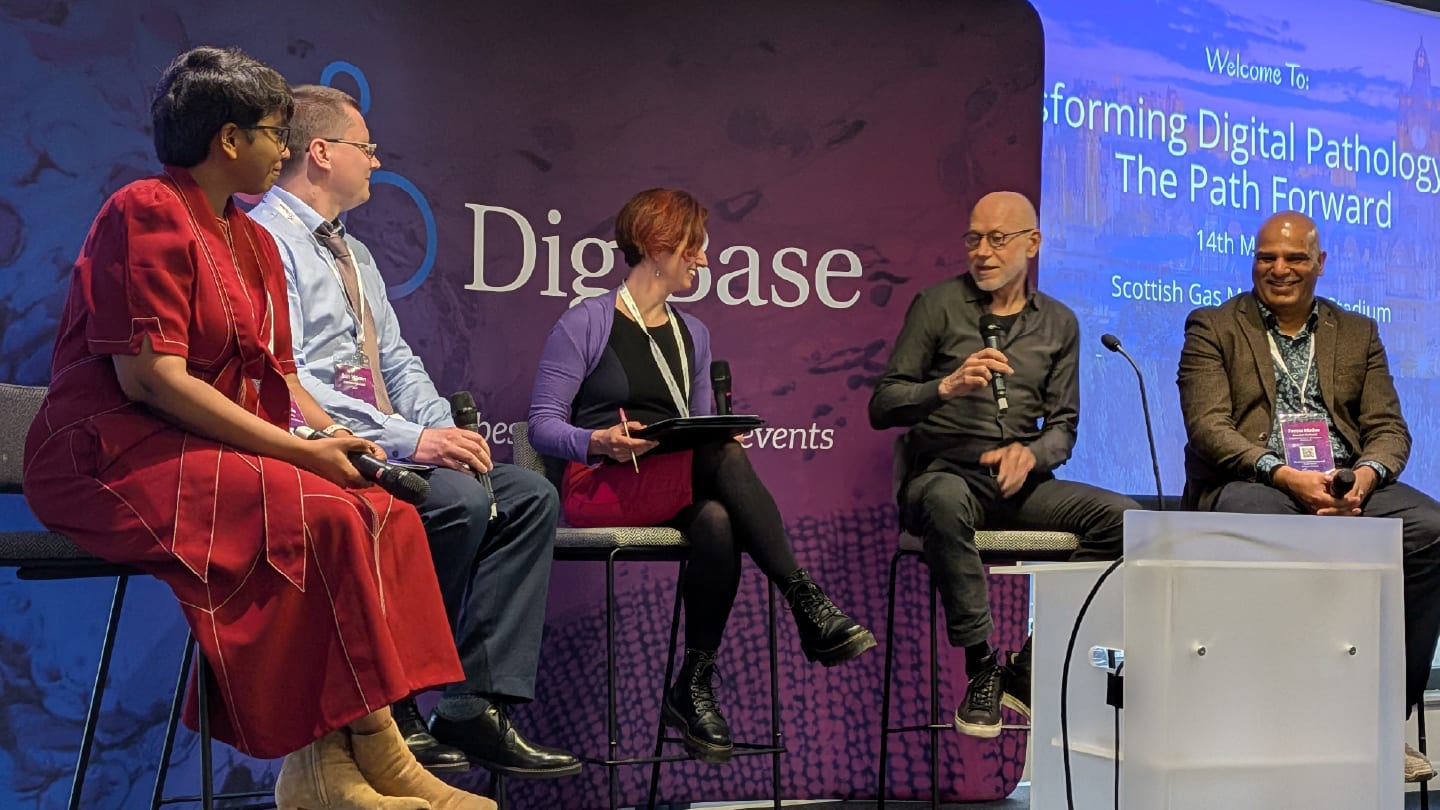
These issues came into sharp focus during a panel discussion hosted by The Pathologist Editor, Helen Bristow, featuring representatives from clinical pathology, accreditation, and the pharmaceutical industry. Rather than focusing solely on technical advances, the panel tackled the more difficult questions surrounding implementation, adoption, and workforce acceptance.
Fayyaz ul Amir Afsar Minhas acknowledged that AI in pathology has sometimes been overhyped, but argued that a certain level of excitement is necessary to maintain momentum and investment in the field. Jeroen van der Laak, however, stressed that laboratories and clinics – not the technology itself – must remain the priority.
One recurring topic was how AI should be positioned within pathology workflows. Several panelists suggested that reframing AI as a supportive tool, rather than a diagnostic replacement, may help encourage broader adoption among pathologists and laboratory staff.
Hadassah Sade summarized this idea when discussing image analysis tools, explaining that AI is “not about seeing more, rather classifying what we can see.” The comment reflected a broader shift in thinking around augmentation: using computational tools to improve triage, classification, and consistency while keeping human expertise central to diagnostic decision-making.
Cost remains another major bottleneck. Throughout the discussion, panelists emphasized the need to generate stronger evidence demonstrating clinical and operational value if DP and AI tools are to become integrated into guidelines and routine procurement pathways.
Scott Maleney also pointed out that many laboratories still lack the fundamental infrastructure needed for large-scale DP and AI adoption. At the same time, he argued that laboratories will not fully understand what needs fixing until they begin implementation efforts themselves.
Audience members also raised concerns about recruitment and retention. Several attendees suggested that future generations of pathologists may increasingly choose laboratories with modern digital infrastructure over those relying entirely on traditional workflows. That discussion naturally led into questions around resilience planning – particularly how laboratories should prepare for digital system failures while maintaining safe contingency pathways.
Despite the enthusiasm surrounding DP and AI, the conference consistently returned to the importance of maintaining workforce capacity, continuous training, and human expertise. The overall consensus was not that pathology will become fully automated, but that its future will be collaborative, multidisciplinary, and increasingly supported by digital technologies.
The conference highlighted growing momentum behind DP and AI adoption, but also the operational, financial, and cultural barriers that still stand in the way. Interest across the pathology community is clearly high – now the focus is turning toward how laboratories can move from discussion to sustainable implementation.
Newsletters
Receive the latest pathologist news, personalities, education, and career development – weekly to your inbox.