When a group of women pathologists in Australia came together in 2023 to look into workforce parity, they unearthed an important question: if women have made up 30 percent of the pathologist workforce for the last 15 years, and nearly 50 percent since 2019, why are so few women in leadership positions?
Their resulting study, published in Pathology, the journal of the Royal College of Pathologists of Australasia (RCPA), revealed a raft of gender stereotypes, discrimination, and structural and organizational barriers that are still rife in both the clinic and academia. But importantly, the paper also addresses steps for tackling the problems at an institutional level.
The Pathologist caught up with three of the study's authors, prior to their presentation on the topic at the United States and Canadian Academy of Pathology (USCAP) 2026 meeting. Here's what they had to say on their findings and their proposed strategies to redress the gender balance.
Meet the panelists

Caroline Cooper is Medical Director and Senior Staff Specialist, Anatomical Pathology, Pathology Queensland at the Princess Alexandra Hospital, Brisbane, Clinical Associate Professor, Faculty of Health, Medicine, and Behavioral Science, the University of Queensland, Australia and President-Elect of the Australasian Division of the International Academy of Pathology.
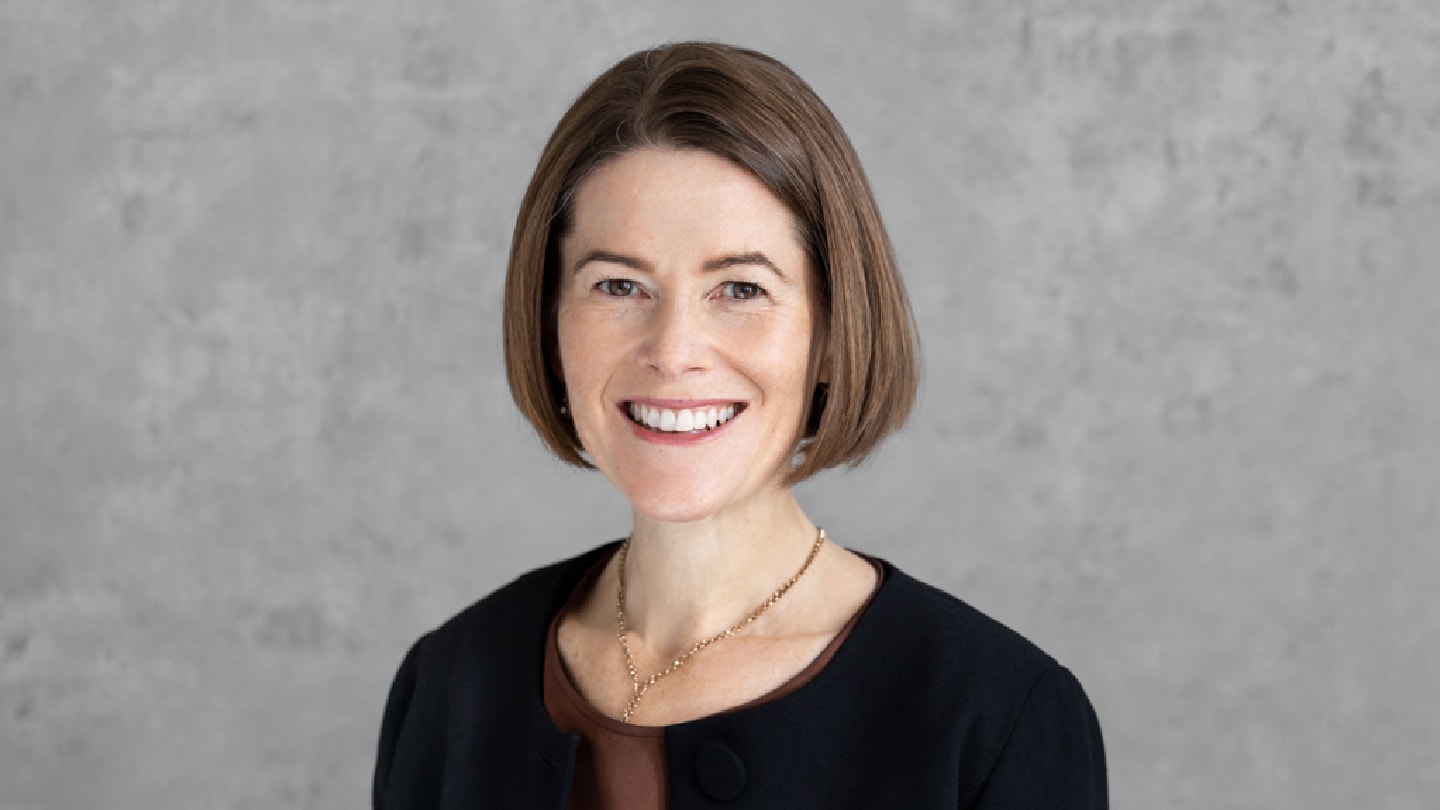
Catriona McKenzie is Senior Staff Specialist, Tissue Pathology and Diagnostic Oncology, at the Royal Prince Alfred Hospital, Clinical Professor at the University of Sydney, Australia, President of the Australasian International Academy of Pathology (IAP), and Chair of the RCPA Academic Committee.

Wendy Cooper is Senior Staff Specialist, Tissue Pathology and Diagnostic Oncology, at the Royal Prince Alfred Hospital, Anatomical Pathology Clinical Stream Lead for NSW Health Pathology, Clinical Professor at the University of Sydney, Australia, and a standing editor of the WHO classification of Tumors.
How would you describe the current state of gender balance in pathology leadership?
CM: In Australia, where we all practice, there is a really strong pipeline of female talent, with over 50 percent of medical students now being women. In pathology, over 50 percent of pathologists are now women. The problem is that percentage is not reflected at the leadership level – particularly in more senior roles.
The three of us collaborated with a group of senior women pathologists from around Australia and some male allies, and undertook a fairly deep dive into the literature and publicly available data on leadership positions in pathology.
First, we looked at college presidents in Australia, USA, and the UK. Among presidents of RCPA during 1956 to 2021, only 6 percent were women. The College of American Pathologists was even worse, with 5 percent women presidents. In the UK, the Royal College of Pathologists was slightly more progressive, with 16 percent women leaders up till 2023. But there is still clearly an imbalance. There are similar findings in the wider medical literature.
Another big area of underrepresentation is keynote lectures and society awards. For example, the USCAP annual Maud Abbott lecture is named after a woman, but less than 20 percent of its presenters have been women.
When we looked into academic publishing, we noticed a relatively small gender disparity in first authors. But when we looked at senior authors, editorial boards, and particularly chief editors, far fewer women than men were represented.
WC: People use the excuse that women just haven't caught up yet. But we've had more than 30 percent women pathologists for the past 15 years. That's long enough to reach mid-career and enter leadership. But we're not seeing that 30 percent come through yet.
That trend is evidenced in a huge study in the New England Journal of Medicine of over 500,000 medical graduates over a 35-year period. It found that fewer women than expected achieved the rank of associate or full professor or department chair. Women assistant professors were also less likely than men to be promoted to associate professor. And the situation showed no improvement over time.
Could you give some examples of gender bias that you've come across and the way that it negatively impacts career trajectories for women?
CC: A published example that is very interesting is the credibility bias. For example, women are much less likely to be introduced by their full professional title – and more likely by their first name – when giving talks at conferences than men. The same study noted that if a man was introducing a woman, he was less likely to use her full title than if a woman was introducing either a man or a woman. The result can be an erosion of the perceived authority of women doctors and scientists.
Other studies that have shown that identical CVs are ranked differently depending on whether they show a man's or a woman's name. A man will also be offered a higher starting salary and more career mentoring than a woman with an identical CV. I think people just don't appreciate that subtle bias that women still face.
CM: Interestingly, in that study of the job evaluations, both men and women were likely to rank the woman less favorably. We need to recognize that this is a broader societal issue and that women are also biased against women leaders.
CC: We also investigated the double bind arising from behavior considered assertive in men being perceived as aggressive in women. An assertive woman might be penalized for acting like a man, but also for acting like a woman and not speaking up.
The motherhood penalty was also interesting. Data show that men who have children are perceived well, but women who have children are penalized for it.
What are institutions doing that might exacerbate the biases?
CC: Many strategies that are put in place by organizations aim to “fix the women”. They offer leadership courses, assertiveness training, or schemes that you as a woman have to enroll in to change your behavior.
CM: Unfortunately, while commonly used, some of that training can backfire. There are some studies showing, for example, that anti-diversity training can actually invoke backlash against the underrepresented groups.
WC: We do hear concerns that efforts to promote women will end up unfairly discriminating against men. But I disagree. There's always a place for good men, just as much as good women. By encouraging equal opportunities for men and women, a department is doubling its chance of having good people in leadership roles.
Why is meritocracy failing to balance opportunities across genders?
WC: Many people believe that meritocracy is the fairest approach for leadership positions. The problem with meritocracy is that it holds the presumption that everyone's had the same opportunities and recognition for success – whether that’s the opportunity to do a research project as a resident, present a poster at USCAP, or have their achievements recognized in some way.
However, the data show that women are not given as many opportunities or equal recognition for the same achievements. For example, if there are gender biases in your selection panels, you're more likely to be selected to speak at a conference or chosen for an academic prize if you’re a man. These biases have a knock-on effect in that men can more readily attain merit.
Once you get rid of those biases, then meritocracy is a fantastic thing.
What needs to change, at an institutional level, to remove these types of bias against women?
CC: It's actually very complex because you have political governance at the top, followed by organizational structures, and then individual departments. The best approach comes from changing legislation and compensation – such as parental leave. All of those big ticket items are the most impactful.
The problem is that system-wide change can often take time to make, and can leave people feeling a bit hopeless. Obviously, you can lobby politicians as an individual or cast your vote appropriately, but there are also things you can do within your own organization or department.
For example, speaking at conferences or being selected for panels is very prestigious. But if the selection committee only ever selects men, and then the men go on and select more men, then it's difficult to change the pattern and get women recognized for their work. Structural changes like requiring a certain gender composition of committees or speakers at a conference can be very effective.
A meta-analysis examined what most impacted change at an institutional level, and concluded that structural change was more effective than individual training. Stating a specific goal was also found to be important. That could be the percentage representation of each gender in leadership positions, or for speakers at your conferences. Then you need strategies in place that set out how to achieve those goals.
Say your strategy is that every selection committee panel must have at least 40 percent women and 40 percent men, to minimize systemic biases. Well, then you have to monitor those panels and see if those interventions are achieving the intended impact, and report the findings back. If it's not working, you need to implement different strategies and repeat the monitoring and reporting cycle.
What can women do to further their own careers?
CC: You could start by looking for sponsorship, not just mentorship. I would describe sponsorship as like having your own social media publicist who will promote you even when you're not in the room. Say your sponsor is invited to give a talk, but they have a clash. They can say, "I have an awesome junior colleague that could do it and I think she'd be amazing for the job." There is a lot of literature showing that sponsorship is really important.
Another thing is self-citing – claiming credit for, and keeping tally of, your achievements.
CM: Related to that, I would advise women to learn to recognize their value. Pathologists are a precious resource and there is a recognized world shortage. So, if you're not in a supportive environment, and if it's an option, think about changing jobs. We need to recognize the socialization we've had from an early age and develop the confidence to believe that we are worthy of, and good at, being a leader.
CC: Another thing I wanted to mention is the importance of having male allies. We need to encourage men in senior leadership positions to champion women taking on leadership positions or presenting at conferences, or simply to support them in their endeavors. We can't underestimate the importance of male allies in effecting change.
Could you share some examples of gender equity strategies that are leading to positive change?
CC: We submitted an abstract for our upcoming divisional IAP meeting, listing the recipients of our most prestigious keynote speaker award. It shows that an entire decade went by when no women won. Examining the data can help define a starting point for change.
We had to wait until 2019 for the first woman as president of the Australasian Division of the IAP. But, since then, three women have followed in that position. That has really encouraged women to think, “I could do that too.” Catriona is the current President, and I’m the President-Elect, so we have all encouraged each other.
CM: One change that I was keen to make as IAP President was to introduce a transparent and democratic selection process for all award recipients and keynote lecturers. Historically, it has been “President’s choice.” Now, anyone on the board can make a nomination, and everyone gets to vote. We have levelled the playing field.
CC: Anecdotally, I’m aware of other societies that now have a strong mandate for equitable gender representation. I think that's a good thing, and shining a light on the data helps people think more seriously about that.
The other thing some societies are doing now is introducing formal networking and sponsorship opportunities, which helps provide women with other avenues of support, outside their own institutions.
What advice would you give to your younger self, at the beginning of your career?
WC: I would say, “Know where you want to get to in your career, and be strategic about how you achieve it. Don’t just wait for it to happen.”
CC: Absolutely: be strategic and ruthless, and know the rules of the game. A lot of decisions I've made have been serendipitous, and many have led me on the road to where I’ve arrived. But, as I've become more senior, I've started to make decisions much more strategically.
CM: I think I used to hold myself entirely accountable. But since doing all this work, I've realized how complex it is, and I'd probably be less hard on myself, and a little more patient.
While there are several awards around for under 40s, there's an inherent bias in that. I would say most of my career growth has been after I turned 40, and after I had my three kids. Your career is actually quite long and there is plenty of time for progression.
What has helped you most in your careers?
CC: We were all trained in the same institution – with incredible women and men as allies and sponsors. Guided by that, we have all deliberately sponsored, nominated, and uplifted people around us. I think that's been a very deliberate and valuable thing for all of us in our careers.
Newsletters
Receive the latest pathologist news, personalities, education, and career development – weekly to your inbox.