Conexiant
Login
  • The Analytical Scientist
  • The Cannabis Scientist
  • The Medicine Maker
  • The Ophthalmologist
  • The Pathologist
  • The Traditional Scientist
The Pathologist
  • Explore Pathology

    Explore

    • Latest
    • Insights
    • Case Studies
    • Opinion & Personal Narratives
    • Research & Innovations
    • Product Profiles

    Featured Topics

    • Molecular Pathology
    • Infectious Disease
    • Digital Pathology

    Issues

    • Latest Issue
    • Archive
  • Subspecialties
    • Oncology
    • Histology
    • Cytology
    • Hematology
    • Endocrinology
    • Neurology
    • Microbiology & Immunology
    • Forensics
    • Pathologists' Assistants
  • Training & Education

    Career Development

    • Professional Development
    • Career Pathways
    • Workforce Trends

    Educational Resources

    • Guidelines & Recommendations
    • App Notes
    • eBooks

    Events

    • Webinars
    • Live Events
  • Events
    • Live Events
    • Webinars
  • Profiles & Community

    People & Profiles

    • Power List
    • Voices in the Community
    • Authors & Contributors
  • Multimedia
    • Video
    • Pathology Captures
Subscribe
Subscribe

False

The Pathologist / Issues / 2026 / May / Blood Test Predicts Immunotherapy Response
Oncology Microbiology and Immunology Liquid biopsy Precision medicine Molecular Pathology Research and Innovations

Blood Test Predicts Immunotherapy Response

AI-based analysis of blood DNA maps the complex ecosystem surrounding cancer cells

05/18/2026 News 2 min read
  • Full Article
  • Summary
  • Takeaways
  • Listen
  • Quiz

Share

A machine-learning approach that reads tumor microenvironment patterns from blood-derived DNA has shown promise for predicting immunotherapy response in melanoma and could expand the role of liquid biopsy in cancer diagnostics.
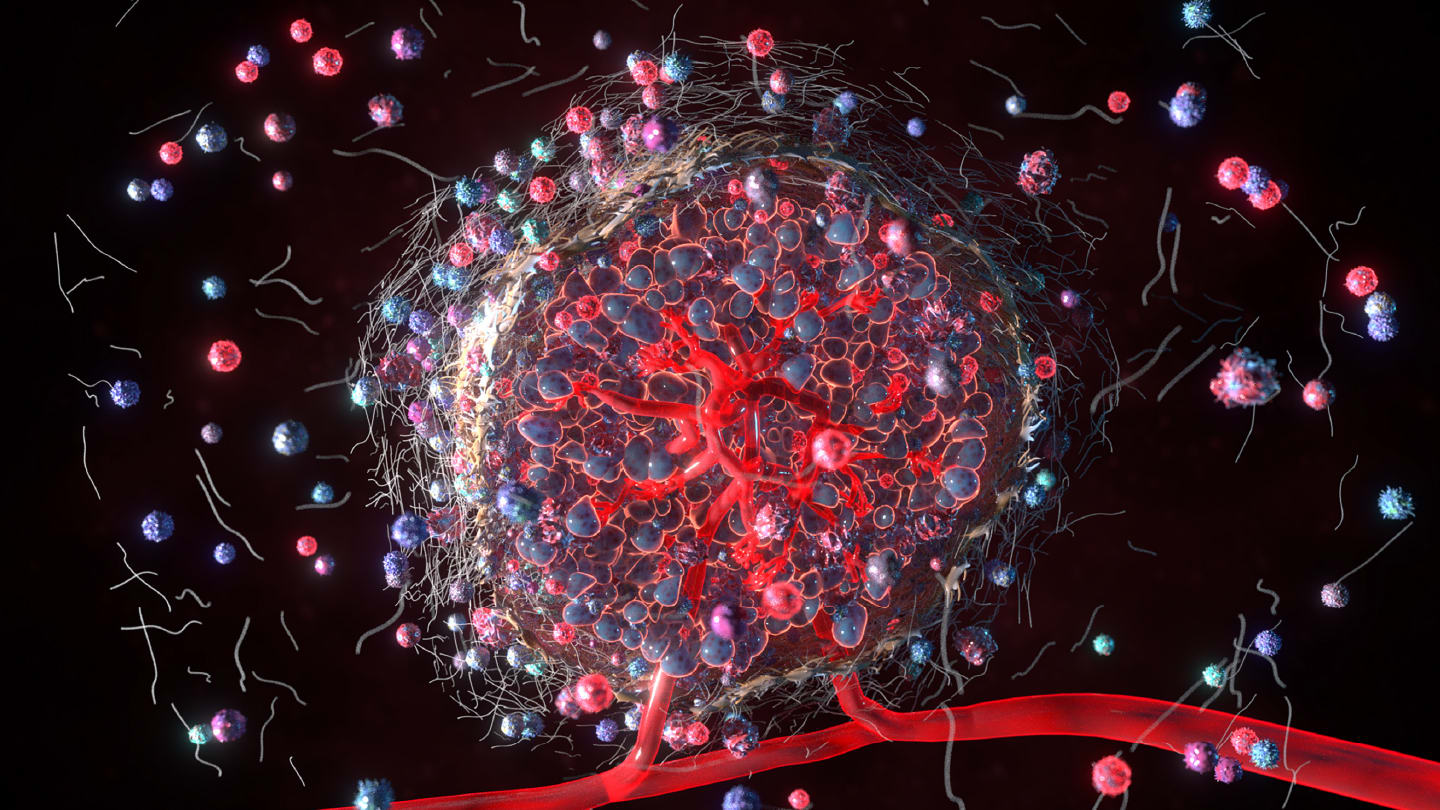
Credit: Adobe Stock

Researchers reporting in Naturedescribed a framework that identifies “spatial ecotypes” — recurring groups of immune, stromal, and tumor-associated cells that occupy specific regions within tumors. By analyzing more than 10 million single-cell and spatial transcriptomic profiles from 132 tumor samples across 10 cancer types, the team defined nine conserved ecotypes linked to tumor biology, survival outcomes, and response to immune checkpoint inhibitors.

The study’s main diagnostic advance was the ability to detect these tumor microenvironment signatures from plasma cell-free DNA (cfDNA). Using a deep-learning system called Liquid EcoTyper, investigators inferred tumor ecotypes from cfDNA methylation patterns in patients with melanoma. The liquid biopsy results closely matched tissue-based spatial transcriptomic findings and showed strong associations with immunotherapy outcomes.

Senior research Aadel Chaudhuri, Professor of Radiation Oncology at Mayo Clinic, said, "This is the first time we've been able to noninvasively profile the tumor microenvironment at this level."

Several ecotypes correlated with treatment response. High levels of two inflammatory ecotypes, termed SE7 and SE8, were associated with durable benefit and longer survival after immune checkpoint inhibitor therapy, whereas another ecotype, SE4, linked to wound-healing and hypoxia-related stromal activity, was associated with resistance and poorer survival.

Importantly, the cfDNA-based approach outperformed established biomarkers such as tumor mutational burden and PD-L1 expression in several analyses. The authors suggest this reflects the broader biological information captured by spatial ecotypes, which integrate immune, stromal, and vascular features rather than measuring tumor cells alone.

The framework also addresses limitations of conventional tissue biopsy, including sampling bias and the difficulty of repeated tumor collection during treatment. Because cfDNA can be obtained serially from blood samples, the method may support longitudinal monitoring of tumor microenvironment changes during therapy.

"This work opens up an entirely new way of thinking about disease," said Chaudhuri. "We've essentially uncovered a world that was invisible to us before – and now we can access it with a simple blood test."

Although the findings require validation in larger prospective cohorts, the work points toward a future in which liquid biopsy assays provide functional insight into tumor architecture and immune activity, potentially improving patient stratification and treatment monitoring in oncology diagnostics.

Newsletters

Receive the latest pathologist news, personalities, education, and career development – weekly to your inbox.

Newsletter Signup Image

Explore More in Pathology

Dive deeper into the world of pathology. Explore the latest articles, case studies, expert insights, and groundbreaking research.

False

Advertisement

Recommended

False

Related Content

Context Matters in Cancer Biology
Microbiology and Immunology
Context Matters in Cancer Biology

December 27, 2021

1 min read

Akoya is leading the way with spatial phenotypic signatures – a novel class of biomarkers for predicting response to immunotherapy

What’s New in Infectious Disease? (December 2021)
Microbiology and Immunology
What’s New in Infectious Disease?

December 23, 2021

1 min read

The latest research and news on COVID-19 and the infectious disease landscape

Immunology Insights
Microbiology and Immunology
Immunology Insights

January 13, 2022

1 min read

The latest research in pathology and laboratory medicine

2021: A Laboratory Medicine Roundup
Microbiology and Immunology
2021: A Laboratory Medicine Roundup

January 18, 2022

3 min read

From transgender health care to the power of pathology podcasts, we take a look at our most popular articles of the last year

Affiliations:

Specialties:

Areas of Expertise:

Contributions:

False

The Pathologist
Subscribe

About

  • About Us
  • Work at Conexiant Europe
  • Terms and Conditions
  • Privacy Policy
  • Advertise With Us
  • Contact Us

Copyright © 2026 Texere Publishing Limited (trading as Conexiant), with registered number 08113419 whose registered office is at Booths No. 1, Booths Park, Chelford Road, Knutsford, England, WA16 8GS.