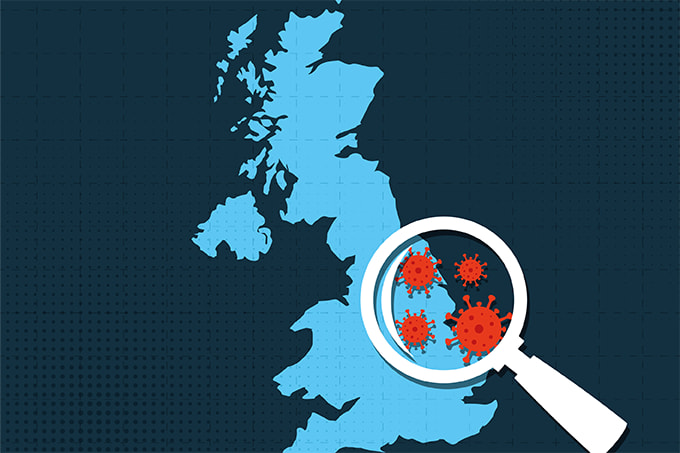
A new report from Imperial College London and the World Health Organization (WHO) suggests the current Ebola outbreak caused by Bundibugyo virus in the Democratic Republic of the Congo (DRC) may be significantly larger than official case counts currently indicate.
As of May 16, 2026, health authorities had reported 336 suspected cases and 88 deaths linked to Bundibugyo virus disease (BVD), a species of Ebola virus disease. Eight laboratory-confirmed cases had been identified in Ituri Province, while two additional confirmed cases were detected in Uganda among travelers arriving from the DRC.
Using two separate epidemiologic modeling methods, researchers estimated that the true number of infections could range from approximately 400 to 800 cases, with the possibility that more than 1,000 cases cannot yet be ruled out.
The importance of the report lies not only in the estimated case numbers, but also in what they reveal about outbreak detection and surveillance. In settings where laboratory confirmation is limited and access to healthcare may be inconsistent, official case counts may substantially underestimate the true scale of transmission.
One model used cross-border travel data and the two confirmed exported cases identified in Uganda to estimate likely transmission levels in eastern DRC. A second model worked backward from reported deaths, using historical data from previous Bundibugyo virus outbreaks to estimate how many infections would likely be needed to produce the observed mortality figures.
Although the two approaches relied on different assumptions and data sources, both produced broadly similar estimates. The authors noted that this convergence strengthens concerns about under-detection and wider community spread.
The report highlights the central role of diagnostics and surveillance during outbreaks of high-consequence infectious diseases. However, uncertainties remain around case detection, border movement data, and historical estimates of case fatality rates and disease progression.
It is likely that additional clinical, epidemiologic, and laboratory data will be needed to refine estimates as the outbreak develops.
Newsletters
Receive the latest pathologist news, personalities, education, and career development – weekly to your inbox.