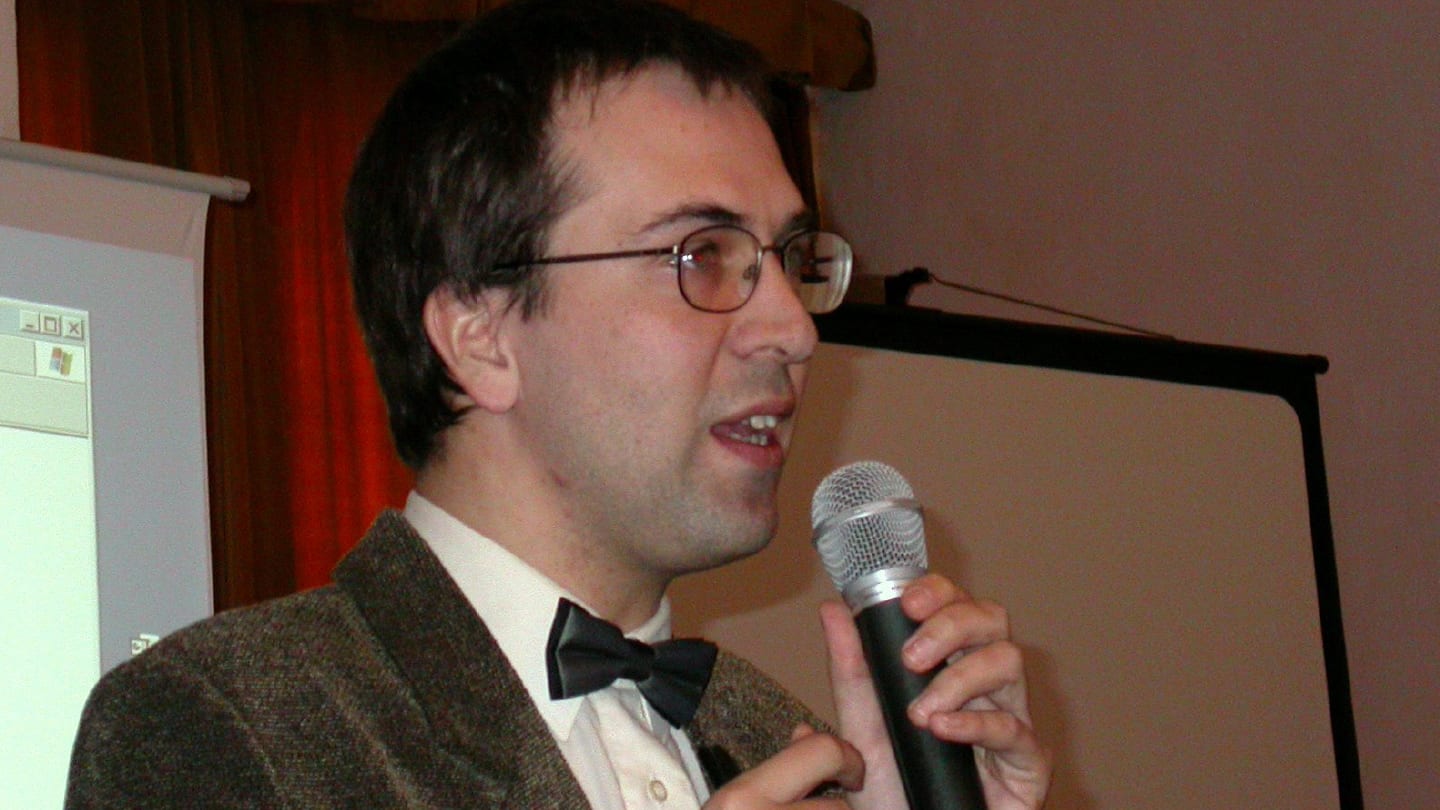
Aleš Ryška is Chair of The Fingerland Department of Pathology, Charles University Medical Faculty in Hradec Králové, Czech Republic – a position he took on relatively early, and somewhat unexpectedly, in his career. Here, Ryška recalls the challenges of being propelled into a promotion, learning on the job, and bringing a well-established team along with him.
What were the circumstances that led to your appointment as Chair of Pathology at your institution?
According to the rules at the Charles University, heads of department can remain in the post only up to the age of 66, at which point they must resign. Unlike other European countries, like Germany, there is no rule permitting only external candidates. However, internal candidates are hard to find, since the salary increase for the chair position in the Czech Republic is small, whereas the increase of duties is enormous. To compound that, only doctors at professor or associate professor level are eligible.
When I was 36, the Chair of Pathology reached the end of his tenure, and I found myself as the only potential candidate for the position. And so, I had to accept that challenge, and became a very young chair of the department.
What were your initial feelings about the unplanned career move?
I did wonder how the move would affect my career because, of course, with an increase of organizational and bureaucratic duties, you have to decrease other aspects of the role. Being adamant that I did not want to decrease my diagnostic and clinical work, I had to pare back my research activities, which I still regret.
I also wondered how well I would be supported by my peers. Actually, they were happy that I became chair, but at the same time they had expectations that I could solve certain problems. The reality was that some of the circumstances were outside of my control and influence. I quickly learned that if you make somebody happy, you might disappoint someone else. You never can make everybody happy.
How much leadership experience did you have when you started in the role of chair?
I didn't undergo any formal training in leadership. My only relevant experience was as a leader in a Boy Scout group. That had given me some responsibilities and organizational duties that I could build on.
It helped that my predecessor stayed in the department and, when I asked him for advice, he always obliged. He had a smooth and easy manner, never pushing me or telling me, "You should now do this." He always started with, "Oh, you have to decide by yourself. It's your decision." And then I would press him for a bit more guidance. But he gave me his best opinion, and I was able to benefit greatly from his experience.

What other support did you have while becoming established in the role?
Our hospital has a tradition that new managers do what they call "a round." You have a series of meetings with important staff members of the hospital management just to become acquainted and find out about their duties and how you will interact with them.
But that was really the extent of my induction into the role. There was no defined transition period, as such.
How did you manage to establish yourself in the role?
Early on, I decided that, because I didn't have much experience and the department was in quite good shape, there was no need for revolution. Before I made any changes, I always discussed them with the team. Together we talked through the pros and cons, predicting any challenges or threats and how we should face them. Just like my predecessor, my approach was very democratic.
Of course, sometimes you have to be a bit more direct. If somebody is boycotting a team decision, then you have to be strong and reiterate that discussion is now over. There were a couple of these situations, but fortunately not many. We have always been a great team, and I never really experienced much conflict.

What changes did you make in the department, and how were they received?
When I took over the department, pathologists were much more specialized. There was one specialist each for breast, thyroid, uropathology, GI, and so on. And it worked very well if everybody was working. But, if somebody took a holiday, or maternity or sick leave, then it started to crumble.
So, I identified those areas for which the work is relatively limited – like renal biopsy, hematopathology, neuropathology – and asked the people to establish small groups of two or three specialists. That formed a small pool that meant those areas were always covered. For the high-demand areas like GI, skin, and GYN pathology, I decided to distribute the work among everybody.
That decision was controversial, for sure. The first year or so was quite tough because people would complain, "I haven't seen the prostate for ages, and now you ask me to report it. I could harm the patient." But, of course, that was not the case. I was sure they were all capable of working that way – it was just out of their comfort zone.
Looking back, everybody's now happy that we organized the work that way. As a department, we are now more flexible and much more resilient to any personal changes, so I don't regret it at all.
How would you describe your leadership style now?
I'm quite a soft boss – not too pushy. If an opportunity for clinical collaboration comes up, I ask who would be interested to step in and participate in the project, so it's their decision. Or if we have residents approaching their board examination who want to start some specialization, I always ask them, "Okay, what is closest to your heart?" If it's something that is not already covered yet, I say, "Perfect. That's exactly what we need." If they say something where the need is less, I ask, "Okay, what would be your second consideration?" So, I always try to encourage people to make decisions so that they feel comfortable in their own development.
But it's a fine balance. Academic institutions here, like anywhere else in Europe, are struggling with staffing levels. We are competing with private labs, which can offer better payment, without the additional responsibilities of teaching and research. So, you must be careful. You cannot push too much, because then the people might leave. But, at the same time, the department must continue to perform, engage in research, publish, and teach the students.
In this respect, I would describe leadership as a gray zone, where you can never really know what's the best. Unfortunately, life has no control arm, so if you make a decision, it is difficult to classify it as right or wrong.
What do you think young leaders offer that older leaders sometimes lack?
I'm sure that young leaders have more energy and, therefore, are probably more open to making significant changes, rather than just keeping things as they are because it worked for the last 20 years. If you want to develop, you need energy for that – and probably also an open mind. Of course, those qualities are not completely dictated by age, but I guess that it's a generation thing to a certain extent.
Another advantage is being closer in age to your peers. That probably gives you a better understanding of their needs and requests. Now I'm older, I already feel that I have a lot to learn about my younger colleagues' angle of view – such as their views on work–life balance, or participation in extra activities. When I was young, it was normal to stay late at work to catch up on research or study, without asking, "What will I get for that?" The new generation is different, from this point of view, and we have to understand that.
What advice would you offer to young leaders today, based on your experience?
I would advise them to maintain a dialogue with their team – and encourage feedback as much as possible. I had great success with my open-door policy, which encouraged people to come to me with their issues as they arose, rather than saving them up for their performance review. I always told my team, "Please, whenever you feel that something is not working, come and tell me. I can solve the problem if I know that the problem exists. If I have no idea, then it's quite challenging to solve it!"
And finally, I would advise maintaining a good work–life balance – which I think I achieved. Remember that you can work hard without being a workaholic.
Newsletters
Receive the latest pathologist news, personalities, education, and career development – weekly to your inbox.