When Annette Kim first considered implementing in-house whole-genome sequencing (WGS) workflows at Michigan Medicine, she soon found that the project reached far beyond simply expanding testing capabilities. Conversations about informatics, scalability, future-proofing, and finances quickly became routine. But, with effective teamwork and valuable partnerships, the plan came together…
Here, Kim shares her experience of creating a molecular pathology workflow that benefits patients, the hospital, research, and the entire university – while expanding in-house testing with a scalable foundation for diverse genomics initiatives.
What was the basis of the molecular pathology workflows at Michigan Medicine before the switch to WGS?
We used a commercial clinical exome panel. It had capacity for eight patient samples per run, each of which required almost two full days of wet bench work. That would be followed by 30 hours on the sequencer and then an additional full day of manually pushing data through the individual pipeline components.
What aspects of that workflow were not working well?
Frustratingly, the panel we used didn’t cover all the regions of genes in our exome slice panels sufficiently well. Those gaps resulted in 43 percent of our runs requiring fill-in Sanger sequencing. Other genes were very poorly covered or not covered all together. We had to design spike-in probes to help provide adequate depth for those targets.
All that extra work added a lot of time to each assay run and made it very onerous to perform.
What were the main drivers for the migration to WGS workflows?
Turnaround was the key driver. The workflow was so long and complex that we were barely meeting our published 4-week turnaround times for samples. That timescale was no longer meeting the clinical needs of our patients – particularly some of our sickest infants in the neonatal and pediatric intensive care units.
Another pinch point was the growing demand from our clinicians for send-out testing for whole exome or genome sequencing. With all our in-house technical expertise, it felt counterintuitive to be sending testing to reference laboratories. If we had WGS capability in-house, we could provide germline testing alongside targeted panels from a single, consolidated platform. What’s more, it would future-proof our genomic analysis against any new disease markers that are discovered, even in dark regions of the genome where currently little is known about disease associations.
What were the key operational considerations for the WGS implementation?
We launched WGS for clinical and research applications asynchronously. We first kicked off a pilot project with the Michigan Genomics Initiative (MGI) to sequence DNA for 10,000 patients in the University of Michigan’s biobank. Once we were smoothly in production for MGI, we launched clinical WGS, co-sequencing the clinical samples with the research samples. This process allowed us to leverage the MGI volume of cases to use larger flow cells – with lower cost per genome – and decreased turnaround times, since we did not need to wait to accumulate sufficient clinical samples for a fixed batch size.
For the MGI cohort, we had to set up bulk accessioning for its DNA cases. By contrast, the clinical blood samples were individually accessioned and extracted. It required merging tasks into a single run list and automating both liquid handling and data processing.
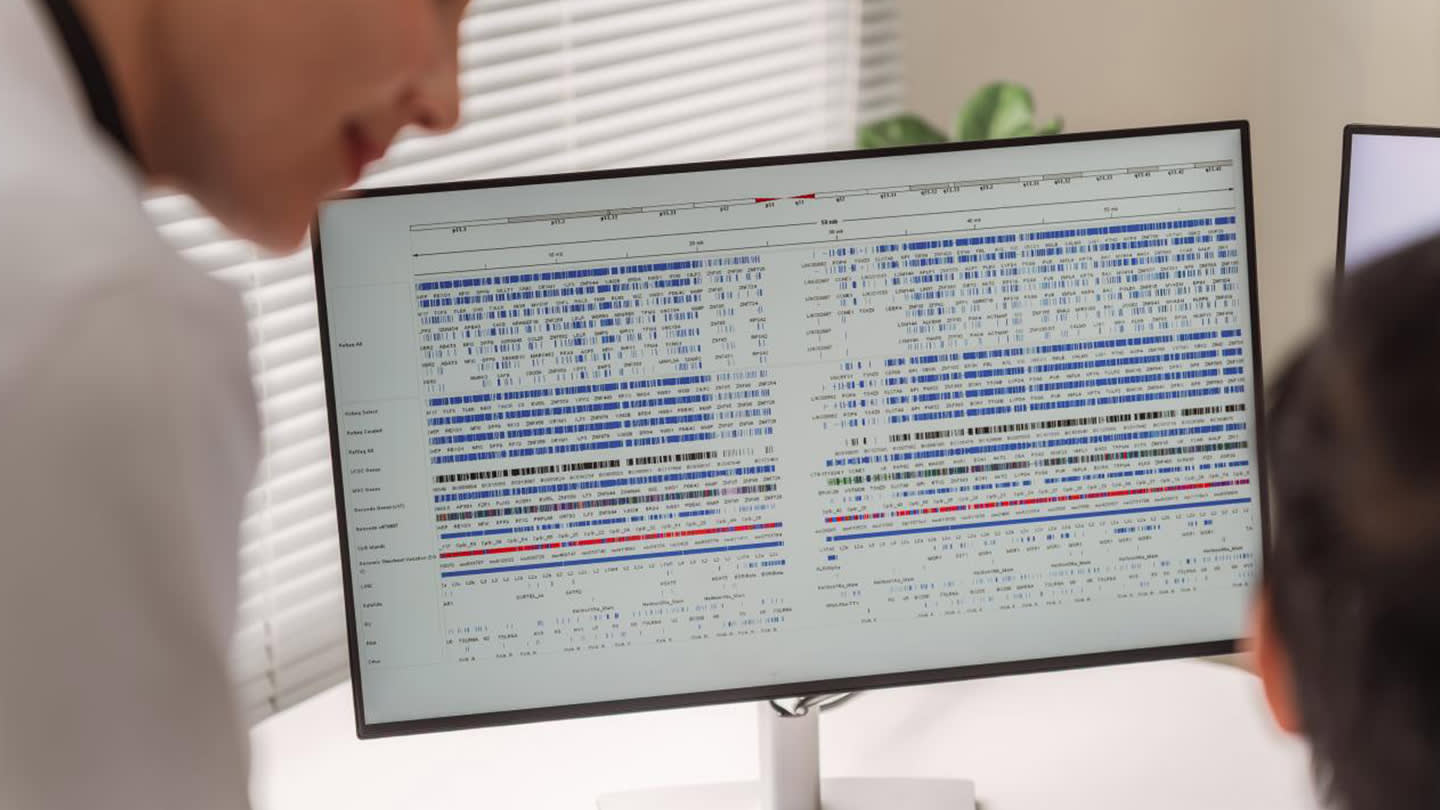
Informatics streamlining was essential to build the cloud procedures. We had to send research data into one bucket while the clinical data needed further processing. We started using bioinformatics software platforms to support clinical reporting. In addition, we needed to format and upload our pre-existing variant knowledge databases into the new software.
What were the key personnel utilization considerations in transitioning to WGS workflows?
The WGS workflow requires around 8 to 10 hours of hands-on time, which is a big reduction on the 16 to 20 hours required for our previous assay. Analysis and reporting time was also reduced with the introduction of the analysis software.
With such substantial efficiency gains, some staff had concerns about what they would be doing when we transitioned to WGS. We were able to reassure the team that their increased bandwidth would be refocused on additional validations and new technology implementation. That generated real excitement for the whole team.
Informatics was a key consideration in establishing the WGS workflow, and part of my responsibility was growing that capacity in-house. We now have a dedicated informatics team, as well as clinical informatics faculty experts who liaise between the faculty and informatics experts.
What are the financial implications of the transition?
When we factored in the reductions in technologists’ time and consumables compared with our prior clinical exome panel, the cost per genome was considerably less. I’m also hoping that the WGS workflow will lead to greater job satisfaction and less turnover of technologists – an intangible but important cost benefit.

How will workflow improvements be assessed?
We will continue to monitor turnaround times. We’re now easily meeting our target times and turning around rush cases in less than a week. The aim is to continue to grow into the rapid genome space so we can best meet the needs of the sickest patients in the hospital.
Another important metric is send-out volume. Now that our sequencing capability is more aligned with our clinician’s needs, that ratio of in-house to send-out testing will significantly increase.
Additionally, the WGS capability will give us far more flexibility to respond to ad hoc requests to analyze specific genes of interest for the more complicated cases.
What are the main clinical benefits of the transition?
We’re finding that the WGS as a platform is very robust, delivering good quality sequencing every time. Without the amplification bias of PCR, WGS provides more uniform coverage, allowing us to detect variants that we couldn’t see before. We can look for pathogenic variants in non-coding regions of the genome, or upstream or downstream variants that aren’t part of the coding sequence. None of that was possible with our exome-directed panel.
Another important benefit of WGS platforms is scalability – an important factor in our workflow design. We incorporated bulk accessioning protocols and data analysis, and automated elements such as liquid handlers and pipeline feeds. Where our previous panel could accommodate only eight patients per run, the WGS runs are able to expand easily to accommodate additional volume as required – anywhere from 4 to 48 clinical samples per run, variably backfilling with research samples).
We also have much more flexibility in the testing we can provide. Because WGS is now recommended in place of chromosomal microarrays for the workup of developmental delay, we can offer testing to a whole new cohort of patients in-house. We're also able to reflex or reanalyze samples on different or broader panels, or even whole genome reporting, which is hugely beneficial for patients and clinicians.
All those capabilities are of huge benefit to our patients and our relationship with the clinicians.

How will you achieve your vision for molecular pathology at Michigan Medicine, with WGS as the backbone?
We are already planning for whole exome and genome reporting. In collaboration with genetic counselors and thought leaders in various medical specialties, we’re consolidating a list of all the panels currently sent out for testing. Those with the highest volumes we’ll bring in-house first. Then we’ll continue down the list, validating new panels and new offerings for our patients rapidly.
What is your advice for other labs looking to transition to a WGS workflow?
One of the first considerations is building the IT infrastructure and cloud networks, and configuring software required to run the technology. Labs should start with creating a first-rate informatics team who will work closely with your vendor to achieve that.
If you’re building for scale, a simple, robust liquid handler is a key element. PCR-free library preparation is relatively simple and straightforward, and doesn’t necessarily require large, high-end liquid handlers. We chose a large, more flexible instrument that would also be amenable to the complex library preparations used by our oncology assays.
Finally, research partnerships within your organization can be invaluable in increasing your WGS volume. Leveraging that additional volume can dramatically decrease the cost per genome as well as turnaround times to meet clinical needs while enhancing the academic mission of your institution.
M-GL-04631
Newsletters
Receive the latest pathologist news, personalities, education, and career development – weekly to your inbox.