A scientist with no oncology background believes he's solved a diagnostic puzzle that's stumped the field for three decades.
We spoke with SentryDx founder Matt Nelson on why blocking PCR failed commercially for 30 years – and how his "Bicycle PCR" could finally make it work.
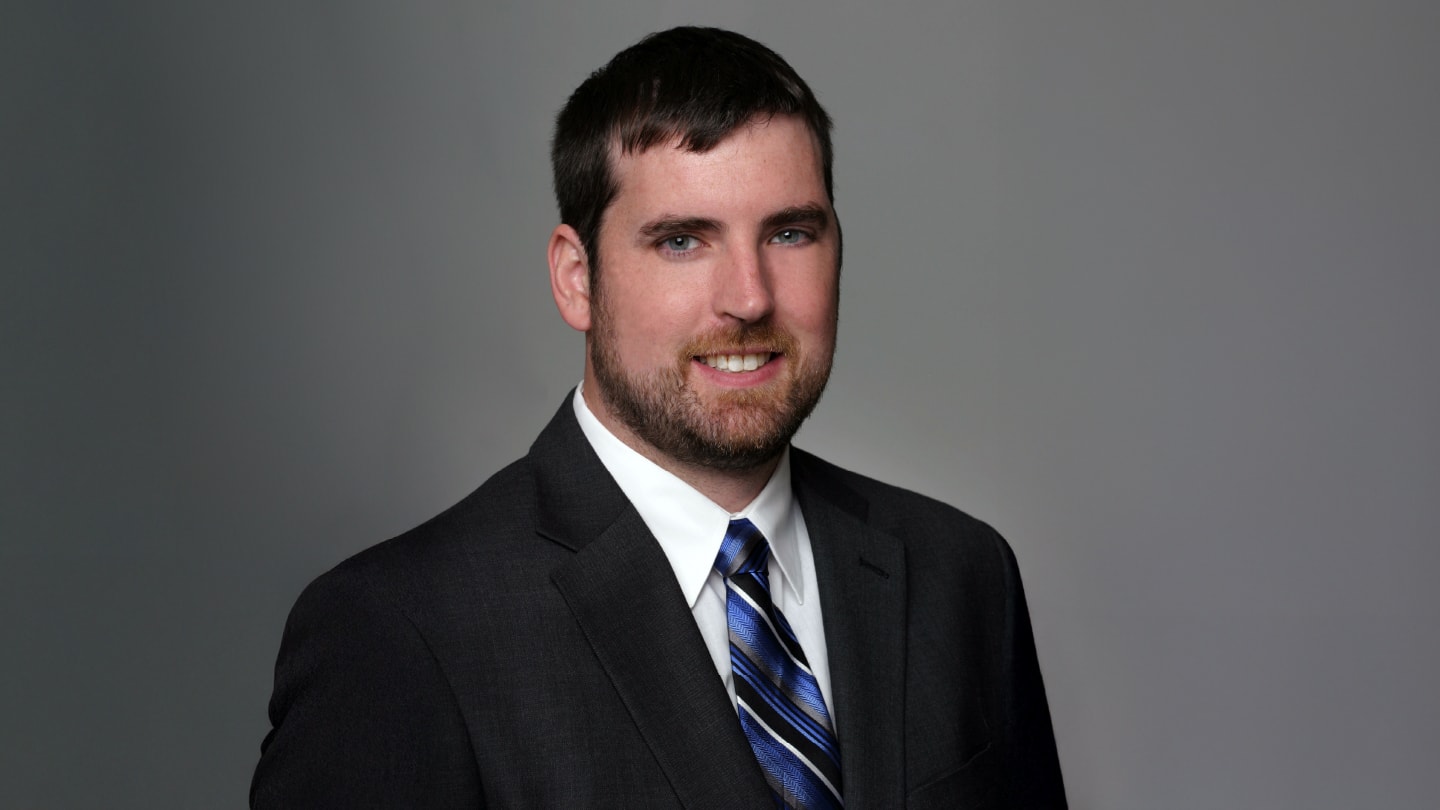
What was your scientific background before launching into oncology?
I got my PhD in bacterial genetics, studying agricultural plants and bacteria. Then my postdoc was in gene editing in bacteria and plants. So, I'm not in the pathology space at all. This is way out of left field.
Following a postdoc in 2018, I was hired by a startup trying to do cancer diagnostics. They had this technology called GMR – giant magnetoresistance – that’s like a molecular-scale compass. If you put a magnet near a compass, it shifts the needle. GMR does that on a molecular level.
Did that work out?
The technology didn't work for cancer diagnostics. So I retooled it for fungal detection from a blood draw. I had done bacterial 16S sequencing, so I applied that knowledge to fungal 23S sequencing. The idea was you'd be able to determine genus and species of fungal infection and make treatment decisions from a blood draw.
I created a really cool system with 36 surface probes and put a heater underneath their magnet to generate melting curves. You'd capture everything and get this massive fingerprint melting curve for each genus and species of fungus. The company's still around, but when COVID hit, they cut everybody's salary by 35 percent. I had two little kids in daycare at the time, so I let myself get hired away.
Where did you go next?
I was hired by Qorvo, a company that wanted to do COVID molecular diagnostics using acoustic wave technology. It didn't work. It was an open system with no seal, so DNA replication would cause false-positive contamination left and right. So they threw me on the COVID-flu combo assay using lateral flow.
I actually had great success there. The NIH did a clinical trial showing that my test – my first experience with lateral flow technology – was more sensitive than any other point of care test, including PCR. It was as accurate as central lab PCR for COVID, and for flu it was 100 to 250 times more sensitive than Abbott's test or comparable flu tests.
What inspired your shift into PCR technology?
In 2016, my wife's cousin got triple negative breast cancer. It was just terrible. She went through a double mastectomy and chemotherapy, only to be told she had a 50/50 shot of still having cancer. That just floored me.
And then it gets worse. They told her that if the cancer was still there and metastasizing, they weren't going to find it until basically it was too late. She was told: 50/50, we find it in a couple of years, and you're dead three years after that.
About a year into it, she had positive test for cancer recurrence. I remember her sitting at our kitchen table, wondering who was going to take care of her 10-year-old daughter.
It took a year for her to figure out it was a false positive. That's a year of planning and thinking and fear. She's fine now – cancer free nine years out. But the fear is still there – is my cancer gone? Is it not gone? She's still messed up by it.
That is why I started my company. I thought, “We have to do better.”
But you had to learn about cancer diagnostics first?
I really did. I had molecular biology, I understood PCR – the core of molecular diagnostics – and I used those tools for gene editing. So I was very familiar with the tools, just not the field.
The FDA has a website listing all approved companion diagnostic tests for KRAS, BRAF, and other genetic mutations. I read all of them. And one thing stood out: there's a massive disconnect between FDA-approved tests' stated sensitivity and what lab-developed tests claim their sensitivity is.
The best FDA-approved KRAS test has a limit of detection of 0.5 percent. But you can pull up papers for Bio-Rad's droplet digital PCR saying it can detect down to 0.01 percent – that's 50 times better. Then you'll see liquid biopsy companies claim they can detect one part per million.
So what's the fundamental problem with PCR tests?
In PCR, there is this concept of melting temperature, at which 50 percent of the DNA has a primer hybridized to it, forming a DNA duplex. IDT, a leading company in molecular diagnostics, has this tool for scientists to use to help develop molecular diagnostics. This tool says that melting temperature changes when concentration of the primer increases.
This is equivalent to saying that 1 liter of water has a different freezing point compared to 100 liters. It does not. The problem is that the underlying process to generate melting temperature changes the temperature at a rate of 0.5 °C/sec. This creates a false understanding of melting temperature, which is that decreasing the concentration will decrease the melting temperature. The truth is that decreasing the concentration just increases the time it takes for the reaction to reach completion. Understanding this simple truth is what allowed me to invent a more accurate way to detect cancer DNA.
How does your approach address this?
I started with blocking PCR. The concept isn't new – it was first published in 1996. But, for 30 years, blocking PCR hasn't been commercially viable. I think I figured out why.
They couldn't inactivate the blocker.
For traditional PCR, if you had 0.1 percent cancer in normal DNA, they both amplify at about the same time, and you can't tell the difference between a normal and cancer sample. Blocking PCR prevents the normal DNA from ever replicating, so now you just see the cancer DNA.
But the problem is your normal DNA now looks like no DNA control. You've lost quality control – the ability to distinguish between normal DNA and no DNA in a sample.
How did you solve it?
We call it Bicycle PCR. We basically block the normal DNA to push it out farther, and then we inactivate the blocker. Now the normal DNA levels come up. So you can see there's a big statistical difference between normal DNA and a low positive cancer sample, and there's still a difference between normal and no DNA.
That means there’s less chance of a false positive result compared with other PCR methods.


How did you validate the test for cancer diagnosis?
The first thing I wanted to know was that I wasn't crazy. I paid a third-party company out in Boston that does liquid biopsy tests to run my test methodology, and they were able to reproduce it.
Then I asked if they could do it on real patient samples. They diluted patient samples down to 0.02 percent – 50 times better than the best FDA-approved test, 20 times better than others. They showed it worked.
Then we got a big grant from the National Science Foundation – an SBIR Phase II. I was able to hire my first employee, and she was also able to reproduce the test in the lab, separate from me. All of those were very solid validations. Okay, I'm not crazy. This is real. We can do it.
When did you actually start the company?
I started my company in 2021. But I didn't leave my day job until 2023. For those two years I was working nine to five at my normal job, taking care of the kids, putting them to bed, and then going to the lab in the overnight hours.
I started a biotech company on $15,000 – half from my parents, half from my grandma. That $15,000 lasted me two years as a biotech startup.
Fundamentally, I'm a scientist, not an entrepreneur. I didn't start this company with a vision for revenue, it was more to do with scientific curiosity: I think blocking's the answer, but I'm pretty sure I'm missing something. What am I missing? Then, okay, I think I found the answer, but is it reproducible by somebody else?
Where are you now in product development?
Cool tech isn't necessarily a product. A few months ago, I really started figuring out what the first product's going to look like. First, it was a two-step process where I'd do PCR and then sequencing to understand optimization. Now, we're putting it in a single tube, running it on qPCR start to finish, and getting a readout.
We call it "the one pot." We had our first really promising results right before Thanksgiving. Right after Christmas we had the one pot working amazingly well. We're confident the one pot works.
I feel like we're really close to having a real product that shows you can do qPCR and your limit of detection's not 1 percent, it's 0.01 percent. The FDA has defined their box for approval for KRAS tests. I'll just make one that's 100 times more sensitive, but still in the box.
What's your commercialization strategy?
I have a company that'll manufacture a kit for me. Once I have a kit and a product and can start showing head-to-head that it's 100 times better than others, somebody will care. But I don't have an ideal customer profile yet.
I've reached out to a couple of companies who've shown interest in partnerships or trying the test in their platform. I think that might be the easiest way.
I thought I could launch a lot earlier than I could. It's been a proven idea for a while, but these companies don't just buy cool ideas and cool data. They buy products.
I did try the whole venture capital fundraising thing. That didn't work at all.
What have you learned about yourself through this process?
I learned that I really like creating things. I get so much joy and energy from solving complex problems.
I don't love growing a company – that doesn't excite me. But I do want the company to grow.
So I'm learning to value the handoff. What does that handoff look like? What would I be okay with? I won't be satisfied with the outcome if I hand it off to the wrong person. I need to be very intentional about it.
If you could sell this company tomorrow, what would you work on next?
One hundred percent economics. I'm going to do my PhD in economics, switching fields once again.
I have an idea about game theory – as discussed in the movie A Beautiful Mind. Its fundamental limitation is that it can't account for irrational numbers. I have an idea of how I could maybe change how we do healthcare if I can show, mathematically, this concept of irrational numbers and game theory's inability to process them.
I've sat on this idea for around nine years – before the cancer idea. I've been messing around with this game theory concept and I feel like I have the pieces in place, but I need the time to write the papers.
So you're not done solving problems?
Not even close. I like trying to help – and failure does not deter me.
Newsletters
Receive the latest pathologist news, personalities, education, and career development – weekly to your inbox.



